See the Platform — What Your Customers See, and What You Control
Explore existing customer and back-office screenshots from the Remitz demo environment. These illustrate the platform; your branding, modules, provider methods and workflow scope are agreed during implementation.
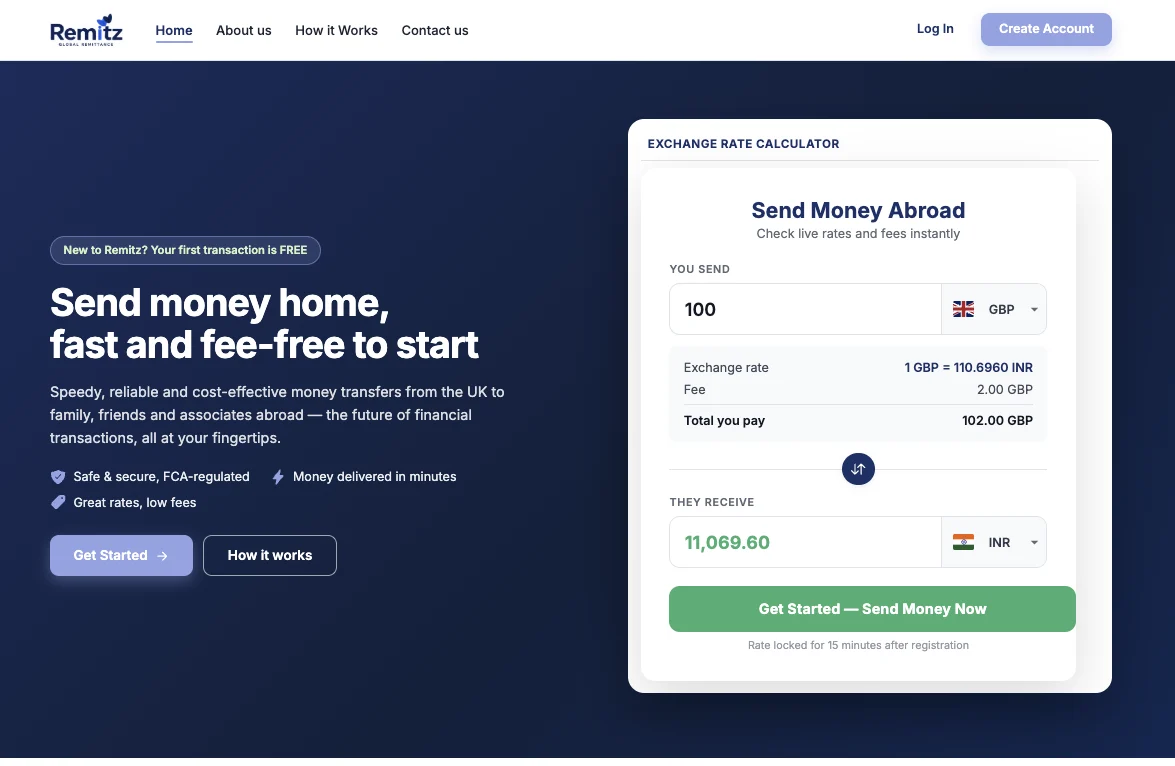
Your website, your rates
This example shows a customer website with the operator’s rates and fees. Your domain and branding are configured to the agreed scope.
Demo interface, not a Remitz money-transfer service. Regulatory labels, promotional offers and delivery times pictured below do not establish Remitz approval or service commitments. Remitz supplies technology; operators retain their regulatory and provider responsibilities.
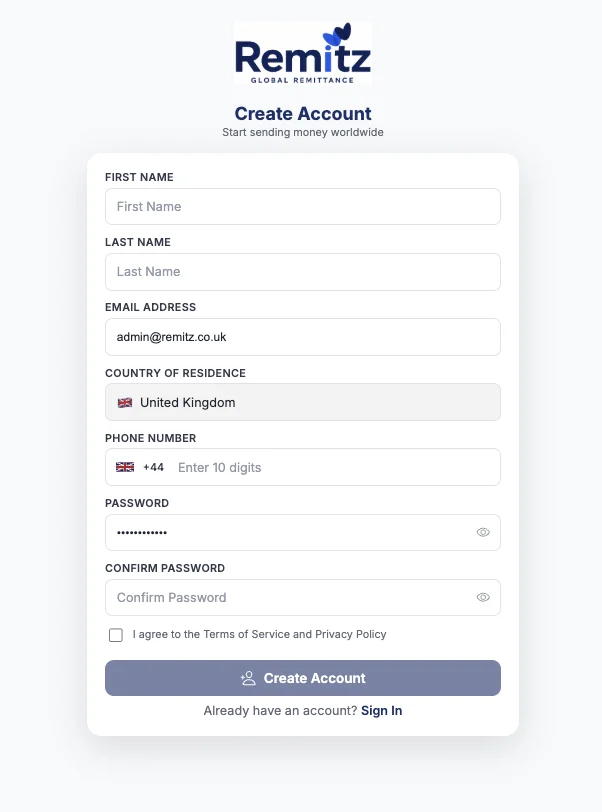
They create an account
This registration form shows contact details, country of residence and password fields. Identity verification and document capture are separate workflows to review with your KYC provider and compliance team; they are not demonstrated in this image.
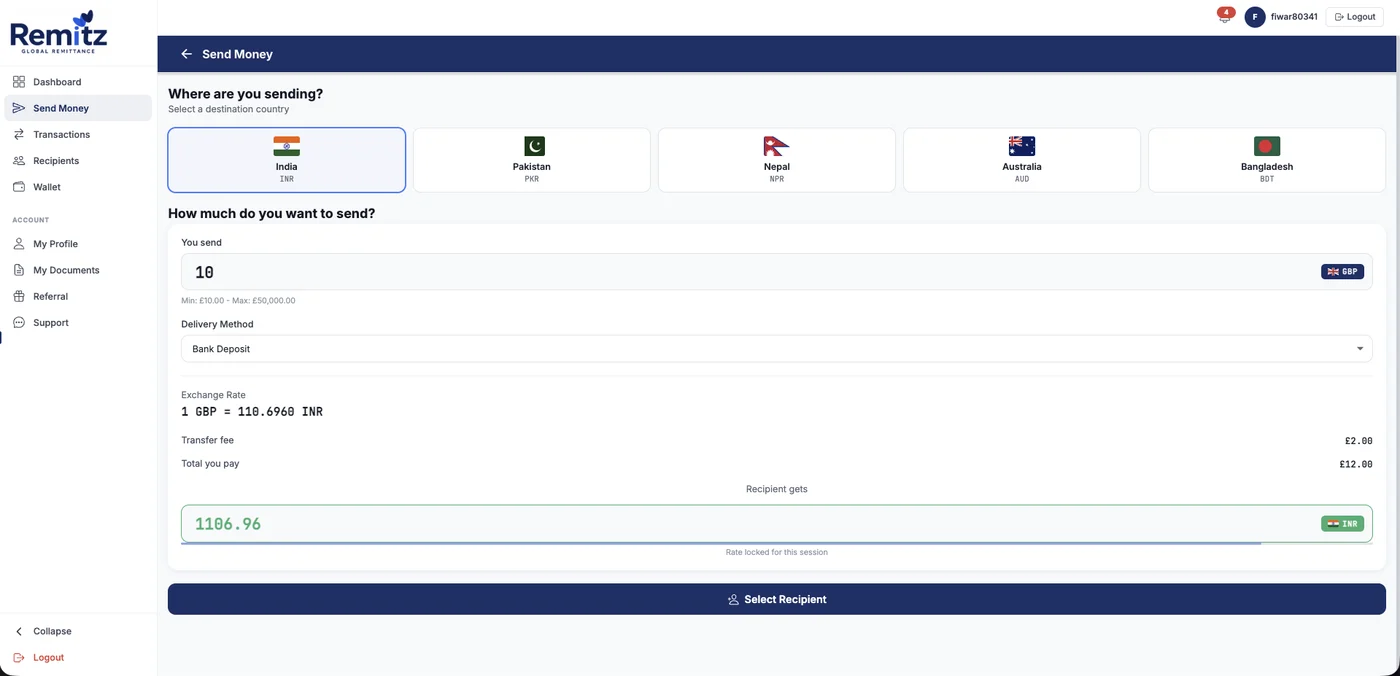
They choose where the money goes
The example shows a corridor, amount, rate and recipient value. Confirm quote validity, fees and delivery methods for your implementation. A new provider or service may require development.
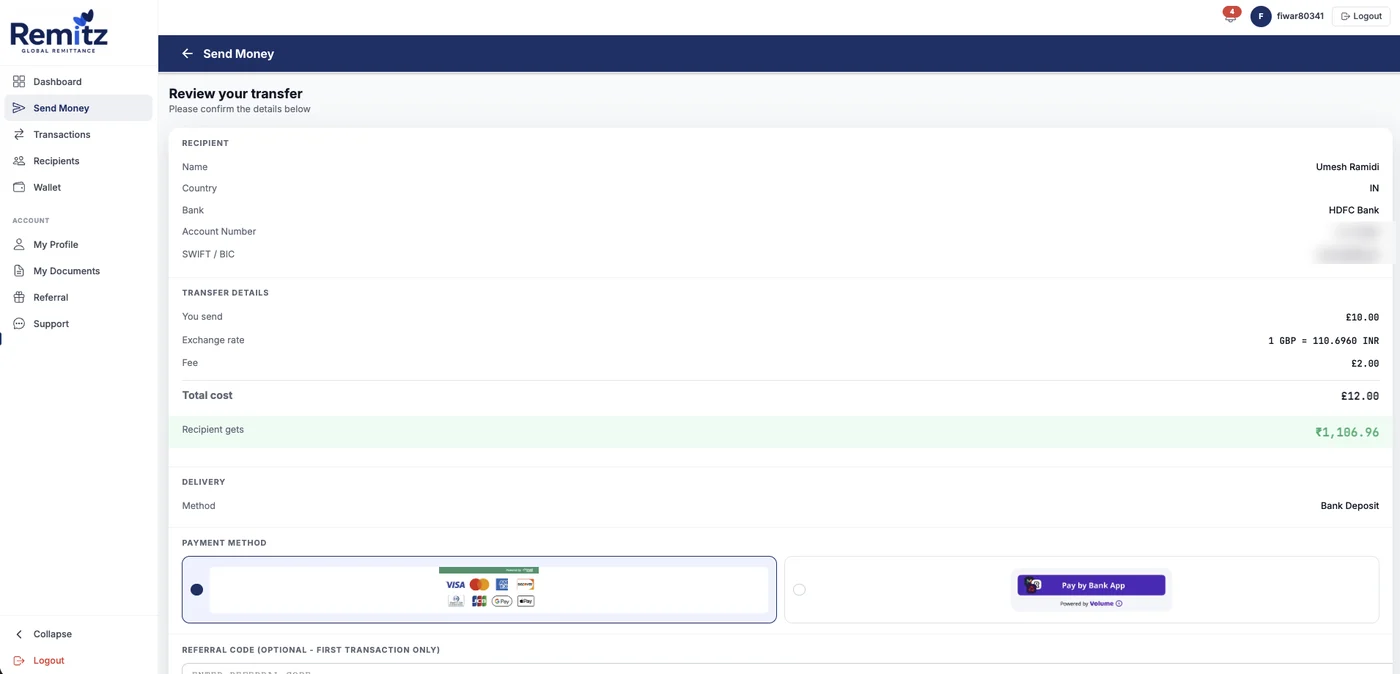
They review and pay
The review shows rates, fees and recipient amounts. Payment methods pictured are examples; availability depends on your contracted services. Remitz does not hold the funds.
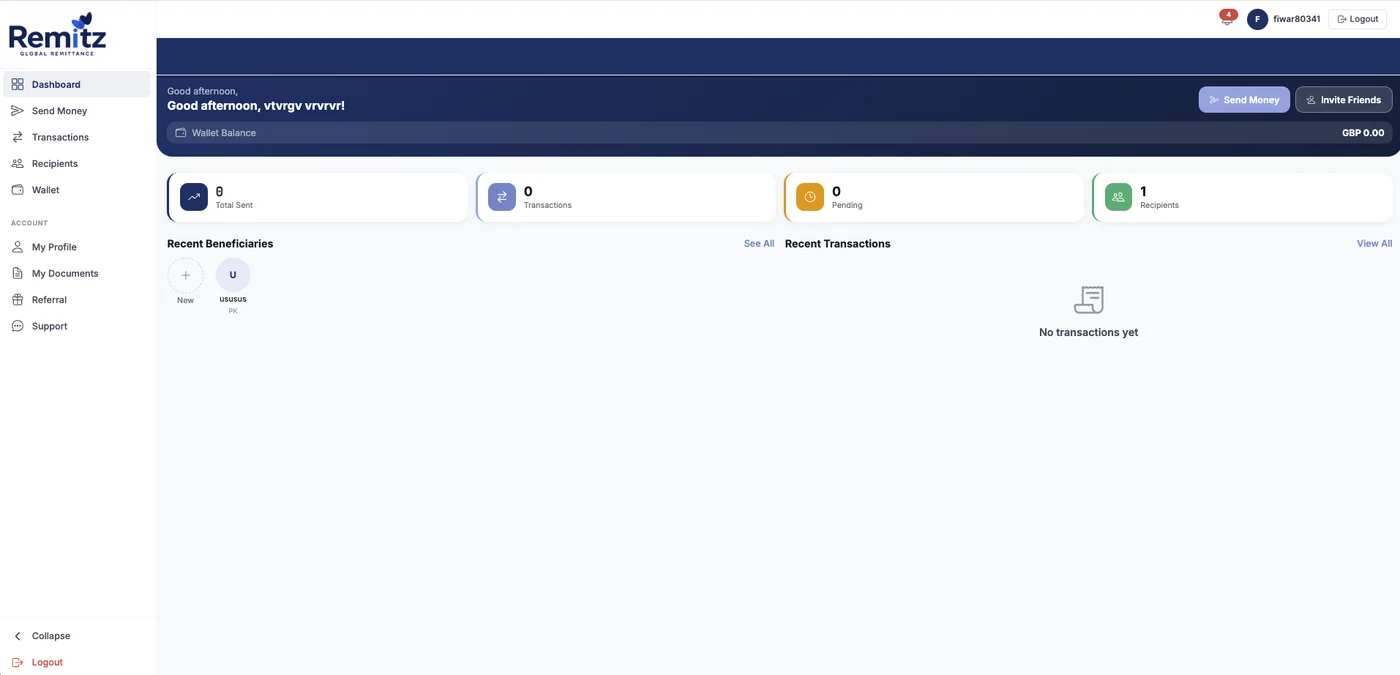
Their customer dashboard
This example has no transactions yet. It shows a wallet-balance field, summary counters and a recent-beneficiary area, not completed-transfer history. Review status updates in a working demo. Wallet and other modules depend on your plan and agreed scope; Remitz does not supply financial accounts.
And this is what your team sees
These back-office examples show operational workflows to review in a demo. Existing configuration and additional development are distinguished during scoping.
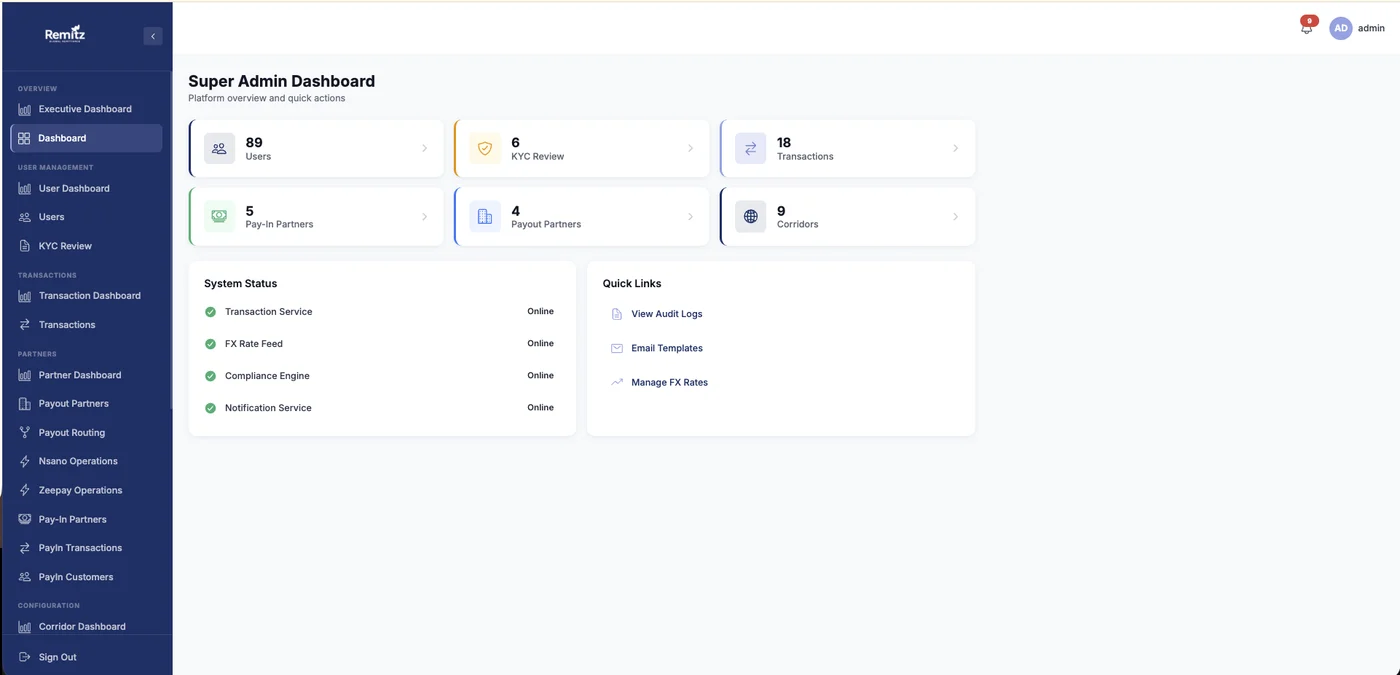
An overview for your operations team
The overview shows counters for users, KYC reviews, transactions, partners and corridors. Demo counts and status labels are not evidence of live business volumes or service availability. Confirm how each measure is calculated and updated for your deployment.
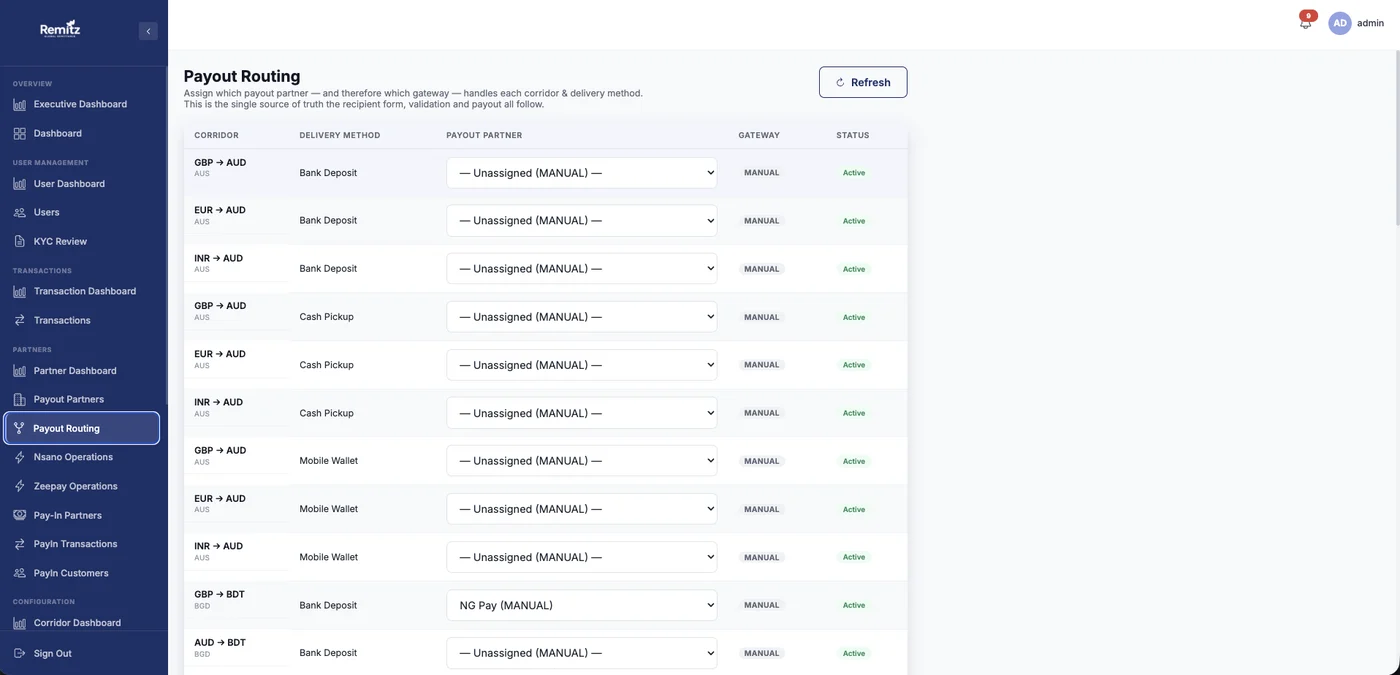
Assign payout partners per corridor
The routing screen groups corridors and delivery methods with provider-selection fields. Several rows are unassigned or marked manual. This demonstrates the configuration interface, not an active payout connection. Confirm connector compatibility, provider access and testing for your requirements.
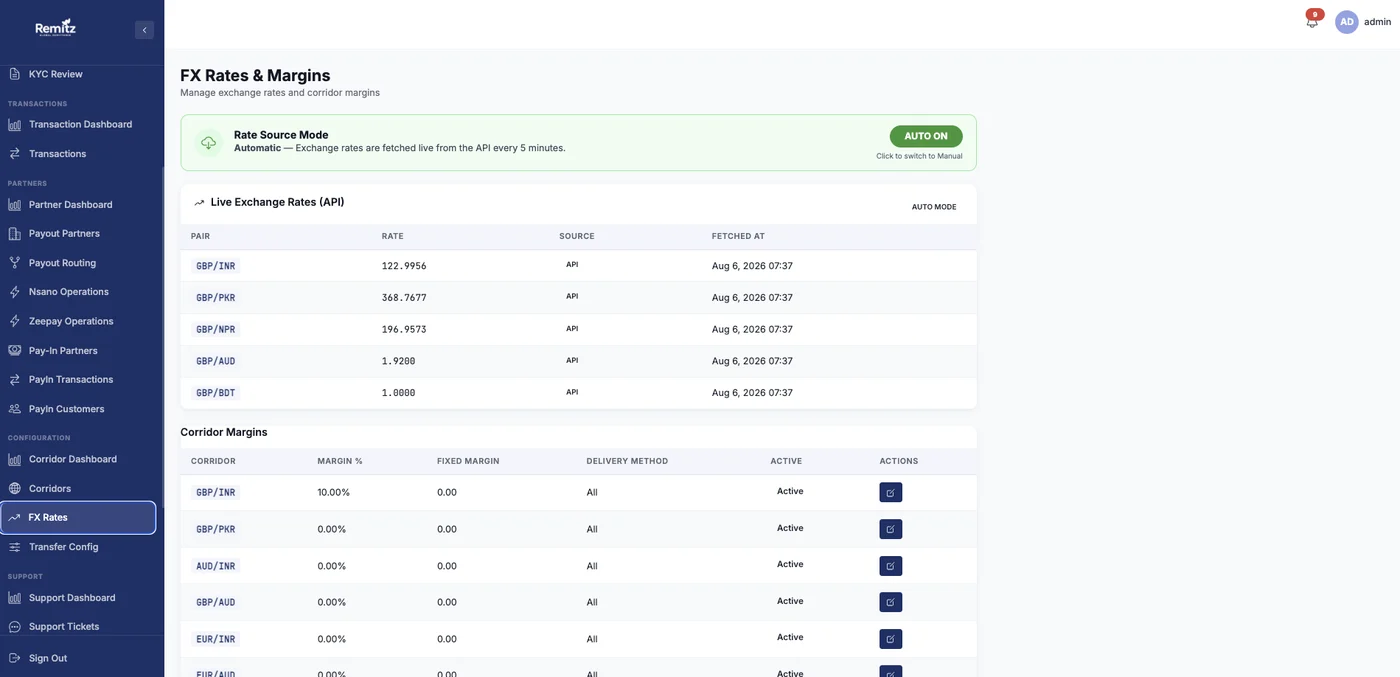
Set your own margin on every corridor
The example shows rate-source settings, fetched-at timestamps and corridor margins. The displayed rates are from a saved screenshot, not current quotes. Review refresh schedules and validate stale-rate and provider-failure behaviour before launch.
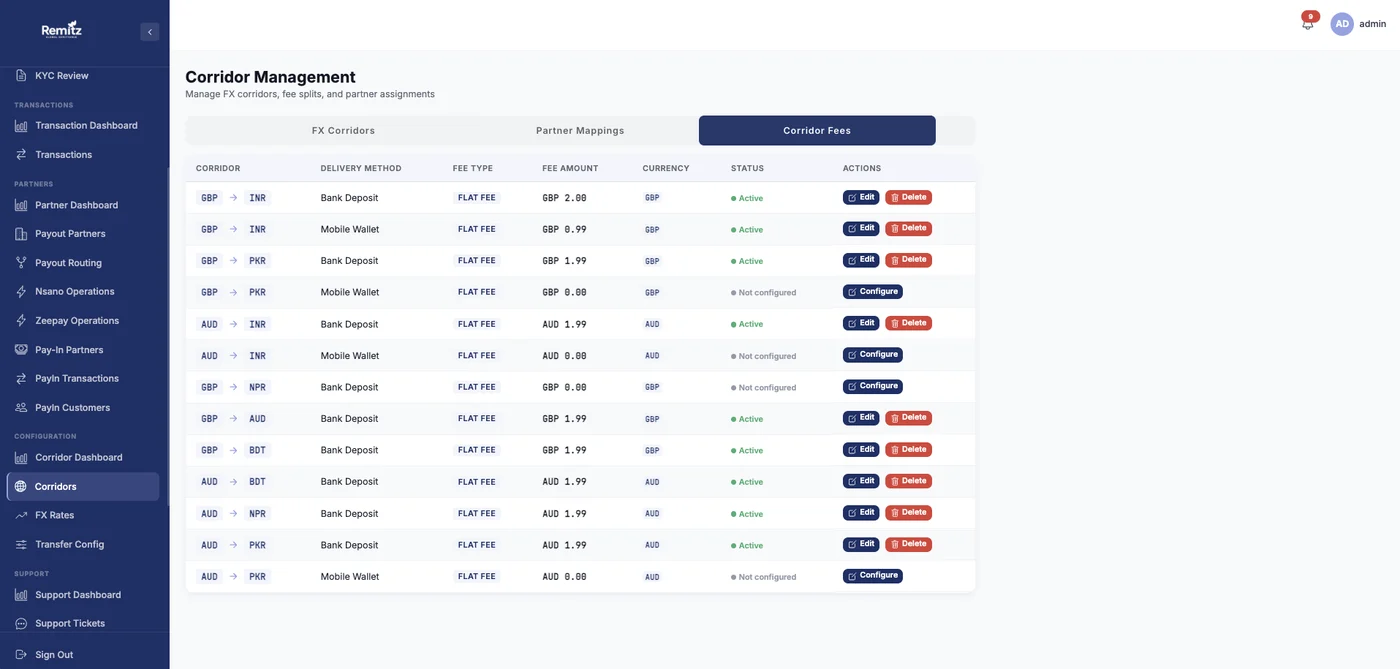
Price each delivery method separately
The fee table shows separate bank-deposit and mobile-wallet rows, with a fee amount, currency and configuration status. Agree fee currencies and calculation rules, then test how changes affect quotes before launch.
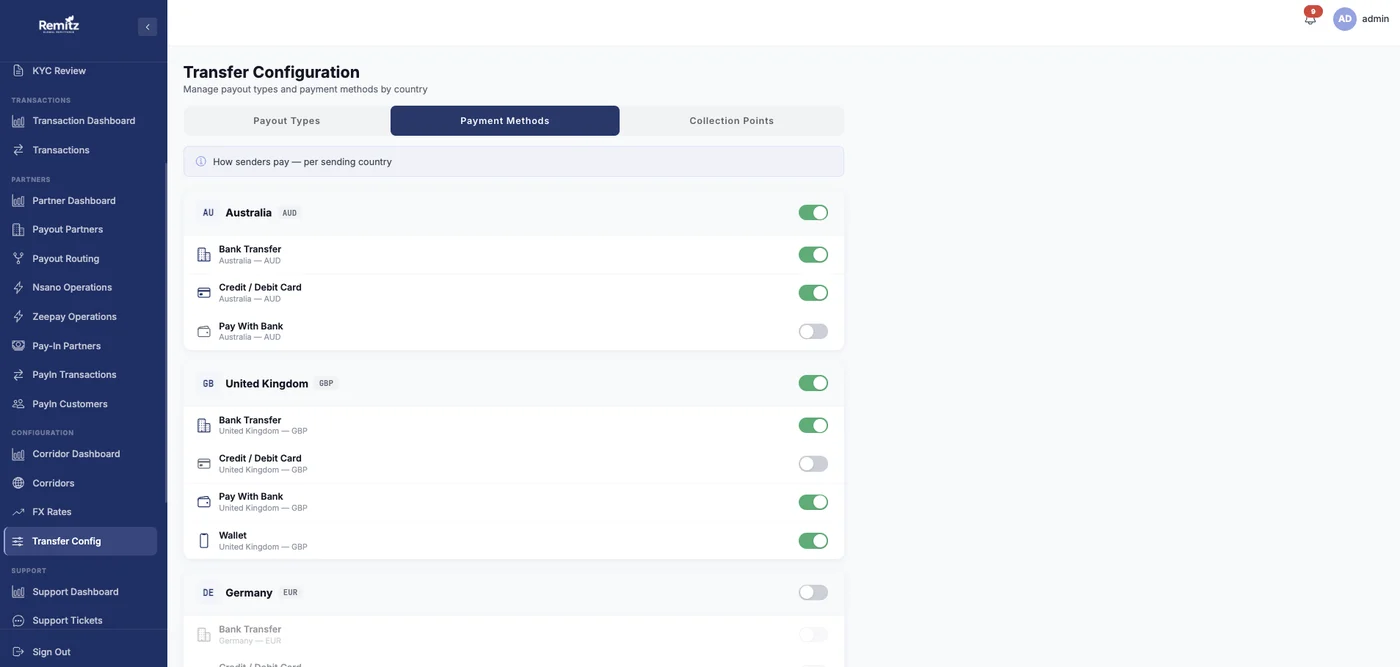
Turn payment methods on and off by country
The example shows payment-method configuration by sending market. Your provider services and regulatory arrangement determine which methods you can enable.
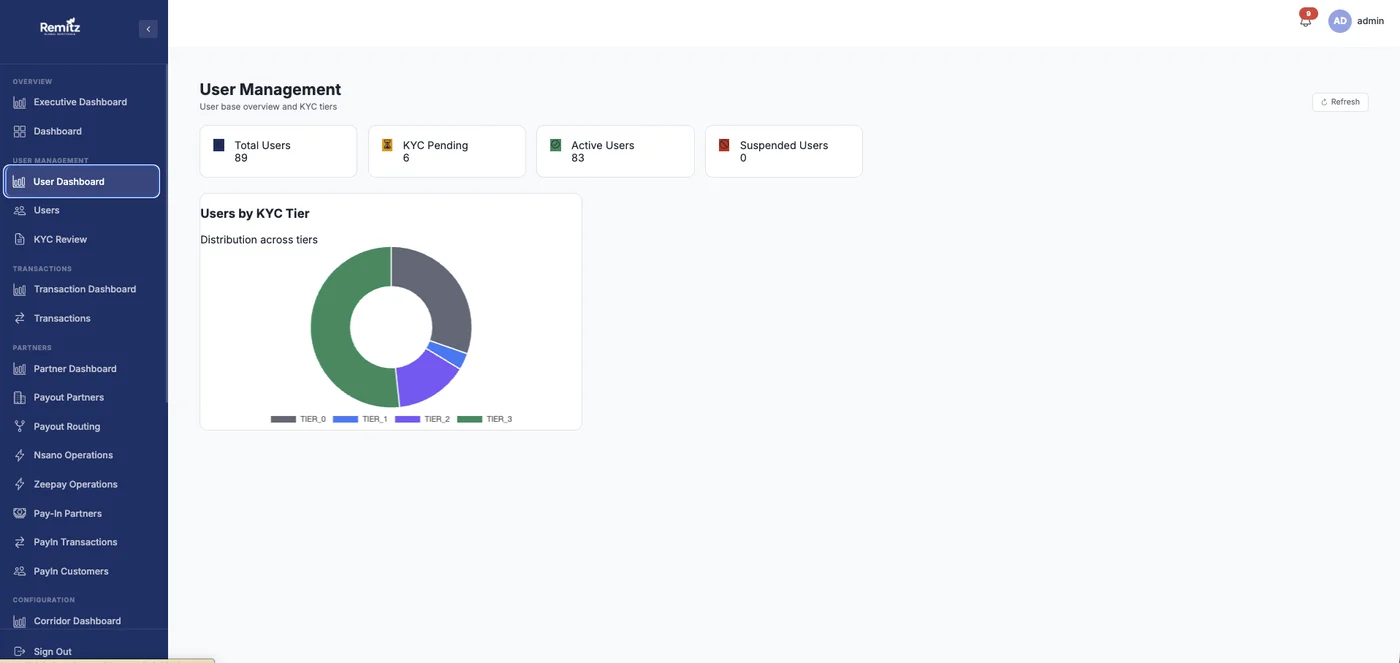
See your KYC position at a glance
Review customer verification states and pending work. Confirm tier rules, report exports and evidence needed by your compliance team; a screen alone is not a regulatory submission.
Agree the branding and workflows for your platform
These are captures from the demo environment. Agree branding across the web, app and staff channels included in your implementation. Screenshots are not a promise that every shown module is included in every plan.
Your licence, providers and customer relationships remain yours.
Trust badges and sample data visible in these screenshots are not evidence of Remitz regulatory approval, certification or customer results. Any badges used on your platform must be supported by your own verified arrangements. Remitz supplies software and does not hold customer funds. See how a launch works.